Calories In a Pizza Slice – Information for Pizza Enthusiasts
- Blog Food
 Kenneth Clark
- January 4, 2023
- 0
Pizza is a dish taken as a meal worldwide, and day by day; it is becoming the most recommended meal. Whenever there is a gathering of colleagues, friends, or relatives if anyone asks for a recommendation, most of the voices echos “pizza.” The market is full of different tastes of pizza and intoxicating toppings. But have you ever thought about what kind of ingredients are used in it, whether it is healthy or not, how much quantity one should have weekly, monthly, etc.? We don’t have ample information, so we blindly take it as a dish on the regular term. Let’s read about the number of calories in a pizza slice.
All the answers to these questions lie in the content below:

Traditional pizza versus pizza of this world
Pizza is an iconic figure in the whole world. It was an Italian dish and a symbol of that culture, but American pizza replaced its popularity with time. In the old ages, it was prepared with straightforward and, to some extent, pure ingredients like bread dough, olive oil, tomatoes, and cheese in a baked form but in a wood fire oven. But afterward, the modern world has added many things which have made a single slice full of calories, like processed cheese of different types, fried chicken sprinkles, baking powder, sausages, etc.
Now people with common sense get an idea of where the problem exists. The pizza prepared nowadays is baked in an electric oven and is loaded with many elements which raise the calories. In addition, there are various flavors like fajita, supreme, smokey, etc., which are encumbered with calories that are unclean for everyone.
So, considering that pizza is a light food and can be taken as a proper meal is an altogether wrong perception.

A handful of genuine information
| Nutritional Information for Pizza Slice | |||||||
| 1 Slice | Calories | Fat | Sodium | Carbs | Fiber | Sugars | Protein |
| Cheese | 285 | 10.4g | 640mg | 35.7g | 2.5g | 3.8g | 12.2g |
| Extra Cheese | 312 | 6.9g | 708mg | 34.7g | 2.1g | 2.8g | 15.3g |
| Pepperoni | 313 | 13.2g | 760mg | 35.5g | 2.6g | 3.6g | 13 |
| Sausage | 325 | 14.3g | 734mg | 35.5 | 2.7g | 3.9g | 13.3 |
| Meat and Veggies | 249 | 11.1g | 601mg | 25.9g | 2.2g | 3.8g | 11.2g |
| Veggies | 235 | 8.4g | 519mg | 29.8g | 2.13g | 3.5g | 10g |
| White Pie | 220 | 6.3g | 441mg | 31.5g | 0.8g | 3.2g | 9.5g |
| Deep dish | 313 | 11.6g | 726mg | 39.5g | 2.8g | 5g | 12.7g |
| Thin crust | 302 | 14g | 742mg | 31.2g | 2.5g | 3.6g | 12.9g |
| Margherita | 241 | 10.3g | 634mg | 26.9g | 2.1g | 2.8g | 9.7g |
| Sicilian | 229 | 8.6g | 400mg | 29.3g | 2.9g | 5.7g | 10g |
Although many concerns are raised about the calorie content of delicious pizza, pizza is still placed on a well-balanced diet. However, each pizza’s calorie and macronutrient composition varies, depending upon cooking techniques. In addition, every person has their preferences when selecting toppings and pizza crust. The U.S. Department of Agriculture (USDA) has given the following Nutritional facts for one standard 107g regular cheese pizza slice from a traditional pizza chain like pizza hut or papa john’s.
Carbohydrates
As per USDA estimates, 12-inch yummy pizza slices contain almost 35.6g of carbohydrates. An average human being is suggested a calorie intake of 1800 calories, out of which 800-900 should be carbohydrates as per CDC guidelines.
Fats
The main contributors of fats in pizza come from cheese, mozzarella, and cheddar, which contribute to high saturated fat and salt. According to standard guidelines, a normal daily intake of saturated fats should be less than 10 percent. It is advised it is better to consume unsaturated fats like omega-3 & 6. Unsaturated fats are found in olives, eggs, fish, tofu, flaxseeds, and nuts.
Protein
A standard pizza slice contributes 12 grams of protein. The daily protein intake of an individual varies depending on age, gender, height, daily routine activities, and calorie needs. Protein intake is vital for muscle development and maintenance as well as the development of connective tissues.
Minerals & Vitamins
A trace level of minerals and vitamins, including magnesium, calcium, iron, zinc & phosphorous, are also present in pizza which is a necessary component of the human diet.
Dense calories in pizza
If you add meat to the topping of pizza, it will boost the calories. It is true that when you go for pizza, the processed meat in it can cause multiple health problems. However, the number of calories depends on the thin or thick crust and how pizza is cooked or baked.
In each slice, the calories are
Extra cheese: If you want fewer calories in pizza, then a slice of plain cheese pizza is recommended, but if you will add more cheese or doubling it, the calorie count will be increased to 312 or even 100 grams per serving.
A slice of plain cheese pizza is one of the lowest-calorie alternatives available, but doubling the cheese increases the calorie count to 312 or more per 100-gram portion.
Fast Food pizzas: A maximum of 285 calories are included in a slice of cheese pizza from a fast food restaurant.
Frozen pizzas: A 100-gram serving of store-bought frozen pizza holds around 268 calories.
Deep dish: If we think about dominos, it has deep dish pizza, comprised of 282 calories. But this is not confirmed as multiple pizza options are lower to 282 in a single serving.
Processed meat: Nearly 250-300 calories are loaded in sausages and pepperoni pizza
Pizza with the Fewest Calories Per Slice
A vegetarian cheese pizza is nearly always the lowest-calorie option, aside from a plain cheese pizza. Most veggie pizza slices have roughly 235–240 calories per piece. When opposed to meat toppings, vegetables are the reason for different flavors with very few calories.
Vegetable toppings such as green peppers, tomatoes, and onions will provide fiber and antioxidants to your diet while reducing calories. Spinach or broccoli are also used for good taste. Sooner or later, the vegetables like bell peppers and mushrooms are the topmost priority to garnish and fill the topping with them instead of meat.
Pizza Calorie-Reduction Strategies
Without cutting down pizza from life, how to cut down the calories from pizza slices is not impossible. First, make half the ingredients that consume a lot of fats and calories. There is a part-skim cheese available in the market. You can use that; otherwise, cutting half of the cheese can balance the pizza and the maintained taste.
The other way is not to buy pizza with cheese and sprinkle grated Parmesan on every slice for good taste. For more goodness, pepper flakes can work. Extra-lean ground beef, ground turkey breast, and grilled or roasted chicken are also low-calorie options.
Avoid asking for leaner meat and absorb calorie-loaded juice through a paper towel. It is hard to know how many calories you have avoided like this, but at least you have saved you.15-40 calories expected to lose in this manner.
Homemade Healthy options
You can also bake your favorite pizza at home for dinner or lunch.
- Start it from a Pizza base; instead of white flour, use whole wheat flour.
- For pizza topping, use olives, pineapples, ham, salami, etc., as healthier options because olives, ham, and salami only contribute 1.5 g, 15g, and 35g of calories, respectively.
- For pizza sauce, reduce the amount of tomato used as it contains natural sugars. You can add oregano, garlic, onion, basil, or rosemary as per your flavor.
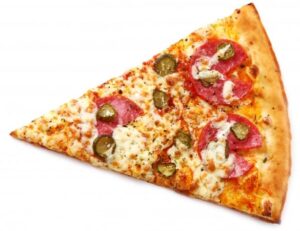
How to order pizza in a restaurant with fewer calories?
It is better to get thin-crust pizza.
Substitute whole-wheat crust for the normal crust to meet approximately 20% of your daily fiber requirements.
Change up the toppings. Try Canadian bacon or chorizo—a spicy Mexican smoked sausage variety—instead of pepperoni or sausage. Save a few calories per serving while still offering a smoky flavor.
Sauces like garlic butter or ranch dressing can be removed while eating pizza as they contain hundreds of calories.
Don’t even think of breadsticks. You can’t imagine the calories one large breadstick contains 200 calories.
Because pesto, additional cheese, or olive oil are used instead of low-calorie tomato sauce, white pizza can have a higher calorie count than regular pizza. A regular slice of white pizza with a thick crust has close to 300 calories with just one veggie topping. To evade calories, order standard or thin crust.
Go to a pizza run by a local. A small restaurant may have a more comprehensive selection of healthy toppings and customizing possibilities than a chain of restaurants. Grilled shrimp, green peas, asparagus spears, artichoke hearts, black beans, maize, spicy fajita chicken, lemon grilled chicken, or fresh minced garlic are just a few possibilities.
Some facts about different types of pizza
- Pizza Slice Pepperoni, 1 slice
- Calories: 298 •Carbs: 34g •Fat: 12g •Protein: 13g
- Cheese Pizza Slice, 1 slice
- Calories: 270 •Carbs: 34g •Fat: 10g •Protein: 12g
- Home Slice Pizza, 1 slice
- Calories: 285 •Carbs: 0g •Fat: 0g •Protein: 0g
- Qt Peporroni Pizza Slice, 1 Slice
- Calories: 259 •Carbs: 30g •Fat: 10g •Protein: 12g
- Pizza Pizza, 1 slice
- Calories: 210 •Carbs: 28g •Fat: 7g •Protein: 10g
- White Pizza Slice, 1 slice
- Calories: 390 •Carbs: 44g •Fat: 16g •Protein: 16g
- Pizza Pizza, 1 Medium Slice
- Calories: 230 •Carbs: 31g •Fat: 8g •Protein: 12g
- Pizza Pizza, 1 slice
- Calories: 560 •Carbs: 83g •Fat: 14g •Protein: 25g
- Rosati’s Pizza, 1 slice
- Calories: 352 •Carbs: 35g •Fat: 16g •Protein: 17g
- Polito Pizza, 1 slice
- Calories: 700 •Carbs: 28g •Fat: 87g •Protein: 0g

A side effect of eating pizza
- Extensive use of pizza can make you diabetic.
- Weight is gained which leads to multiple chorionic issues like inflammation.
- Fiber is a key nutrient that can be affected if you take the pizza as a meal.
- It disturbs the digestive system and one can have severe constipation problems.
- A high level of sodium is problematic for the heart.
Conclusion
If you want to have a healthy life and at the same time want to enjoy spice, adopt a balanced way. You can have a pizza twice a month but not as a meal. To deprive thoroughly from fast food is not a solution instead, it gives hype to depression kind of disorders. Pizza can be healthy if thought is put into its preparation. Use all the healthy ingredients and cook them properly to avoid all the negative aspects associated with them. Top your pizza with ingredients that contain proteins instead of the ones which snatch all the pure organic stuff from your body.
FAQS
Q1: What is the calorie count of a regular slice of pizza?
A: A regular slice of pizza can have maximum116 of 155 calories, depending on the type of pizza you order and the dough you choose, whether it is thin or thick crust or stuffed crust. Margaritas and vegetarian pizzas contain the fewest calories; even then, don’t ever think they are entirely healthy.
Q2: Is a slice of pizza unhealthy?
A: Though a slice of fast food or frozen pizza once in a while is unlikely to affect your weight, consuming these foods daily might lead to weight gain and increase your risk of chronic health problems.
Q3: Which pizza has the smallest number of calories?
A: Thin crust pizzas are usually always lower in calories than hand-tossed crust pizzas. The most calorie-dense pizza is a deep dish or Chicago-style; this is what we all are aware of.
Q4: Is it acceptable to have pizza one time a week?
A: If we keenly see, we realize there are two ways to have pizza: unhealthy (along with additional toppings like pepperoni and sausage) or healthy (full of vegetables). However, because pizza is still high in saturated fat (approximately five grams) and sodium, restrict it to once a week and eat it with plenty of vegetables instead of high-calorie stuffing.
Q5: Will my diet be ruined if I eat two slices of pizza?
A: USDA has surveyed that a regular slice of cheese pizza contains roughly 285 calories. Taking two slices won’t stop you from losing weight, but substituting one slice for a salad or other vegetables could not be drastically destructive for health. Thus, fats and calories don’t dare to arouse multiple issues.
Q6: What are the health benefits of eating pizza?
- By choosing vegetables or fruits (e.g., pineapple) topping, you can increase your fiber intake and antioxidants that reduce mortality risks.
- A wholewheat floor for making pizza dough increases dietary fiber intake, promotes regular bowel movement, lowers cholesterol, and helps manage eight.
- Proteins from cheese and meat maintain optimal growth and mass of lean muscles. Cheese also provides calcium that maintains bone strength.